


Our Journey to Carbon Neutrality
We’re always striving to cut our carbon footprint and have been making a lot of progress. We recently been declared a Carbon Neutral site by ClimatePartner, but there’s still lots of work to do!
What we’re doing to reduce our carbon footprint
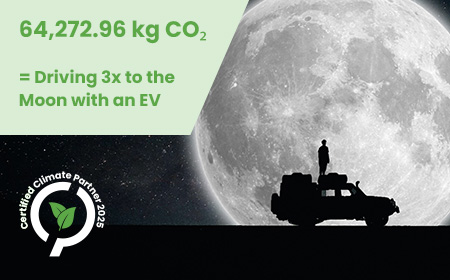
We’ve been reducing our emissions as much as possible and currently produce 81,532kg of CO2e per year.
We currently invest in a carbon offset project which brings wind energy to east Brazil.
Read on to learn more about our Carbon Neutral journey, as we look to cut emissions in real terms at home.

Carbon Neutrality is no easy feat
We wanted to be sure we were doing all we could to reduce our carbon emissions as much as possible before offsetting them.
We do this in many ways, for example, by getting our electricity from renewable sources, and only using recyclable packaging and consumables.
The calculations
We worked with ClimatePartner to calculate our carbon footprint. This includes the energy we use, the waste we generate, and all commuting and business travel.
Not all of these activities produce carbon emissions alone, which is why everything calculated is converted into CO2 equivalents, or CO2e. .
Does carbon offsetting work?
Funding methods to avoid, reduce or remove carbon emissions in one part of the world can offset the emissions produced by individuals and businesses in another.
Carbon offset projects must meet international standards, such as the Gold Standard or the Verified Carbon Standard, and are regularly audited by third-parties.


We use ClimatePartner to offset the carbon from all the devices we supply.
Reducing our carbon emissions further
It’s not possible to be 100% emissions free. So there has to be a certain level of offsetting no matter how green you strive to be.
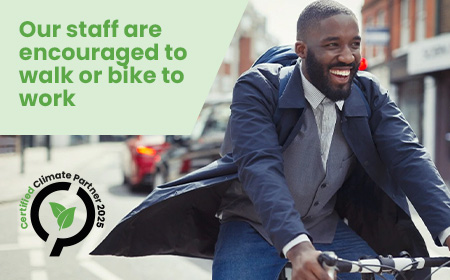
Our biggest challenge is employee commuting because it accounts for 78% of all our emissions. We therefore need to get more of our people onto public transport and riding their bikes.
We will expand the ClimatePartner audit boundaries to include our products and logistics, which will highlight even more areas where we can improve.
And by keeping devices in use for longer through refurbishment, reuse and our IT Reuse for Good Charter, we cut the embodied carbon of new hardware while helping close the digital divide.